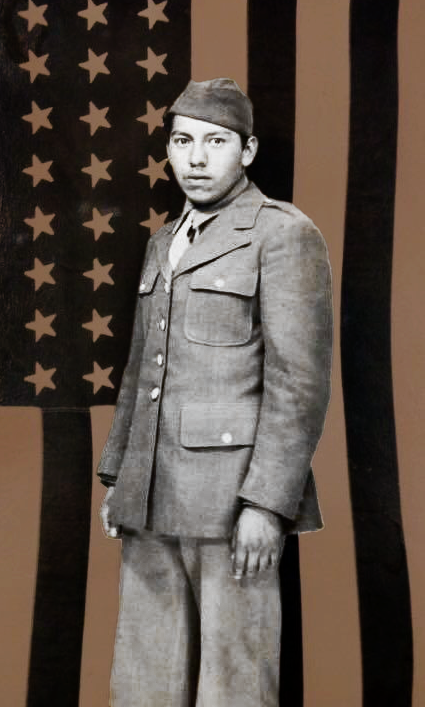
Tribal Captain
Rudy Ortega Sr.

Rudy Ortega Sr., baptized in San Fernando, was a Tribal Captain of the Fernandeño Tataviam Band of Mission Indians.
In the early 1940s, Rudy Ortega Sr., grandson of Antonio Maria Ortega, worked with his aunt Vera Salazar to gather Fernandeños for community meetings. The Fernandeño group met twice a month in local halls or the homes of extended family members to discuss Tribal matters. While spouses were welcomed, only direct descendants of the Mission San Fernando Indians (Fernandeños) were allowed to engage in political votes and discussions.
A Fernandeño Legacy
As a child, Rudy Ortega Sr.’s grandfather spoke of the family’s eviction from Rancho Encino, which led to his representing the Fernandeños in court as a teenager. However, as the years passed, his grandfather and father would not share stories for fear of being noticed by non-Native communities and punished. For context, it was less than a decade prior that American Indians were granted U.S. Citizenship. Even so, the importance of culture was instilled in Ortega Sr. at a young age; in the privacy of their homes, his father and grandfather would make regalia, dance, sing songs, and stressed the importance of a land base for the People.
His effort to gather the Fernandeños was interrupted by the start of WWII, where he served in the U.S. Army from 1943 until the end of the war. Upon his return, Ortega continued his line’s legacy of leadership by organizing the Fernandeños and initiating the formal pursuit for federal recognition in order to attain a land base for the Fernandeños.
In the early 1970s, the Ortega Sr. helped establish a non-profit named the San Fernando Valley Inter-Tribal, Inc. under which they could raise funds for the community. Rudy was elected leader of the new non-profit and a board of directors was decided in community gatherings. Through this initiative, Ortega Sr. could raised funds, applied for grants, held community events, distributed scholarships, food, and toys as well as set the groundwork for the present-day Pukúu Cultural Community Services. Meanwhile, Rudy Ortega Sr. was one of the first to serve on the Los Angeles City/County Native American Indian Commission as well continuously appointed as Headperson of his lineage until his passing.
In 2002, the Fernandeños adopted a constitution and took on the name of Fernandeño Tataviam Band of Mission Indians. Rudy Ortega Sr. was elected president every four years under the new constitution while he still maintained his role as hereditary leader. Under Rudy Ortega’s leadership the FTBMI became more active in federal recognition, protecting sacred sites, recovering culture and language, seeking recovery of ancestral land, and establishing ties to local, county, state and federal governments

Cultural Resources Preservation
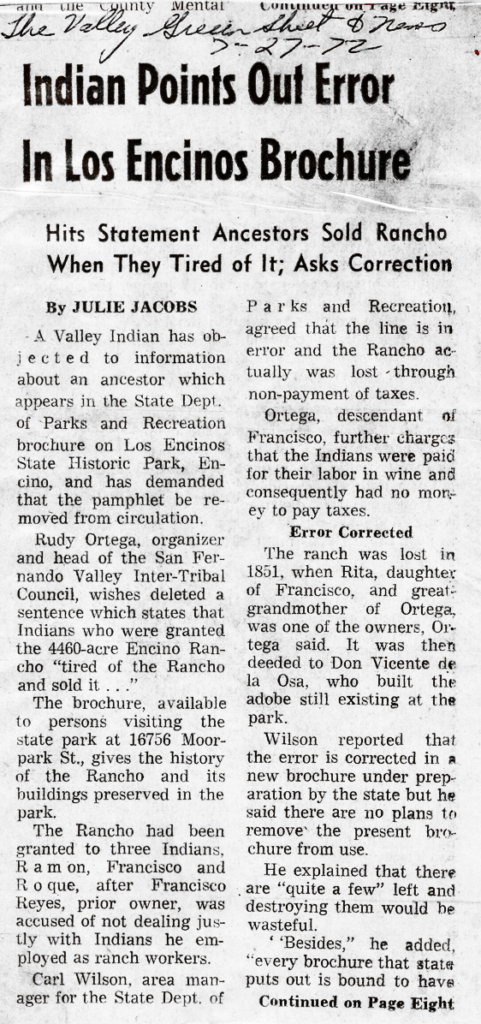
Rudy Ortega Sr. dedicated his life to the benefit and welfare of the Fernandeño community and history. As early as 1972, Rudy Ortega Sr. advocated for the protection of cultural resources and correct signage about the Fernandeños at local state parks. In the 1980s, he advocated for the preservation and nomination of several cultural sites, including the Burro Flats area just south of the village his ancestor was recruited from in the 18th Century.
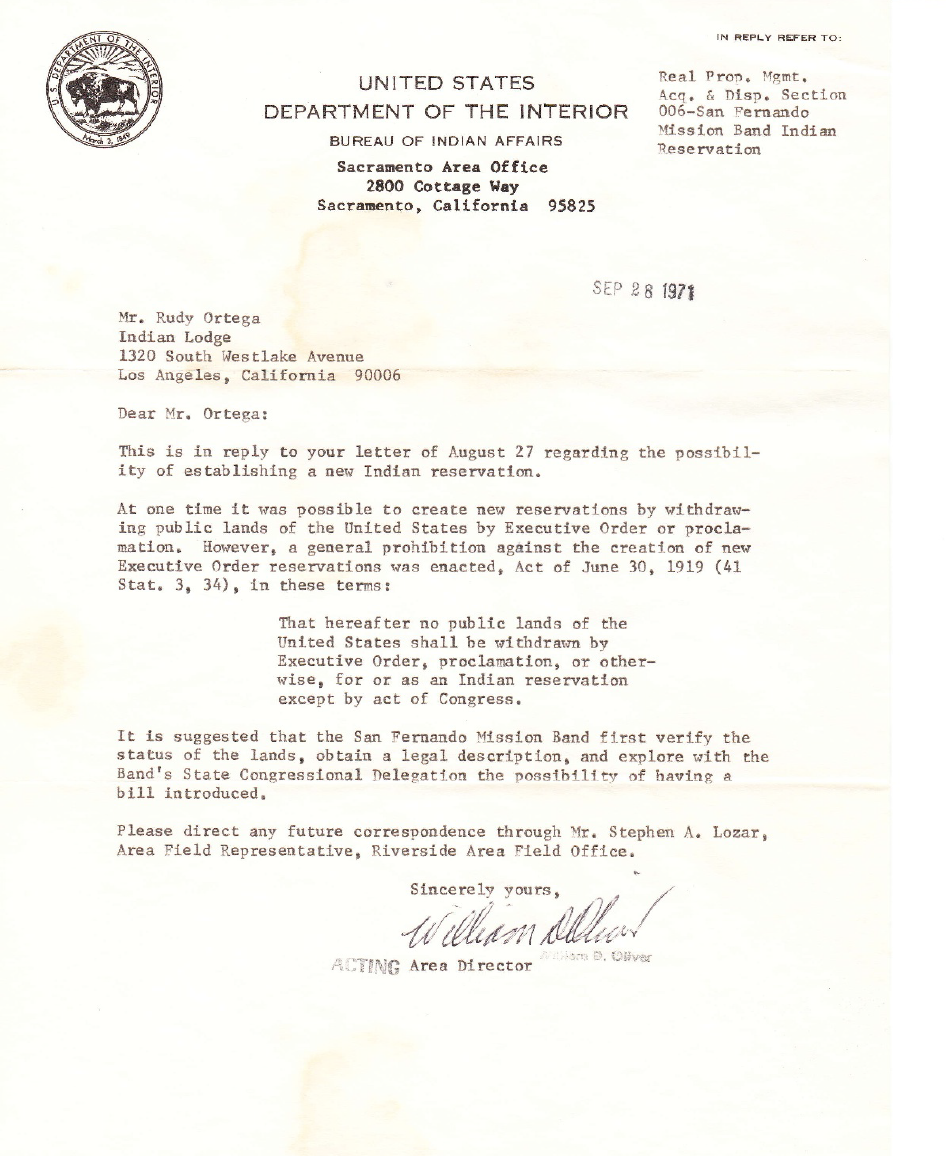
1971 BIA letter to Rudy Ortega Sr. in response to his request for establishing an Indian Reservation for the Fernandeños.